
Improvement Methods guides
Healthcare improvement methods, explained
Practical guides to the methods healthcare teams use to improve care: A3 problem solving, PDSA cycles, root cause analysis, lean and 5S, high reliability, and Six Sigma's DMAIC and DMADV. Each one covers what the method is, how to run it on a unit, and where it tends to stall.

Start here
 Improvement methodA3 problem solving for healthcare teamsHow healthcare teams use the one-page A3 to move from symptoms to root causes, test countermeasures and confirm results, and where A3s usually stall.
 Improvement methodPDSA cycles for healthcare improvementHow to run Plan-Do-Study-Act cycles that teach your team something: the Model for Improvement, small tests, predictions, data over time and the Study step.
 Improvement methodRoot cause analysis in healthcareHow healthcare root cause analysis works: Joint Commission sentinel event expectations, the RCA² recommendations, the action hierarchy and follow-through.
One place for the methods your teams already use
Teams don't have to standardize on a single method. An A3, a PDSA cycle, a kaizen event, a 5S program, a root cause analysis, an FMEA, a DMAIC project or a DMADV design project can each run in ImprovementFlow, with measures attached and follow-up to confirm the gains held.

Put it into practice
Programs that turn this guidance into everyday work
 Improvement ProjectsRun A3s, PDSA cycles, root cause analyses, kaizen events and DMAIC and DMADV projects in one place, with measures attached and follow-up to confirm the gains held.Explore Improvement Projects →
 Operations AuditsCheck 5S and standard work on a schedule, and give every miss an owner, a due date and evidence of the fix.Explore Operations Audits →
 GoodCatchCapture the near-misses that learning from defects depends on, fix the process and tell staff what changed.Explore GoodCatch →
 Leadership RoundingKeep gemba walks and leader rounds on schedule, and give every finding an owner.Explore Leadership Rounding →
Structured problem solving
Methods for working a specific problem from cause to confirmed result.
- A3 problem solving for healthcare teamsHow healthcare teams use the one-page A3 to move from symptoms to root causes, test countermeasures and confirm results, and where A3s usually stall.
- PDSA cycles for healthcare improvementHow to run Plan-Do-Study-Act cycles that teach your team something: the Model for Improvement, small tests, predictions, data over time and the Study step.
- Root cause analysis in healthcareHow healthcare root cause analysis works: Joint Commission sentinel event expectations, the RCA² recommendations, the action hierarchy and follow-through.
 DMAIC and Six Sigma in healthcareHow healthcare teams use DMAIC: what happens in each phase, when it's worth the rigor, a published multi-hospital example, and why projects stall at Measure.
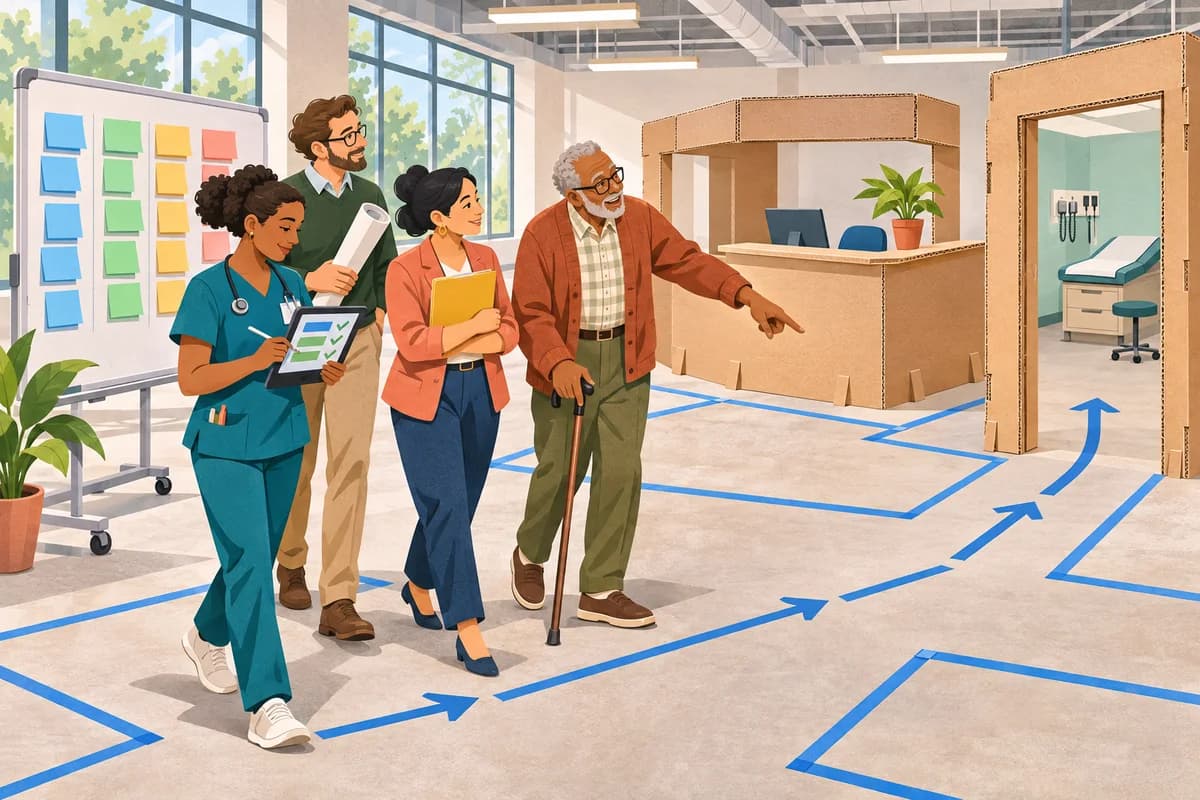 DMADV: designing new healthcare processes with Six SigmaWhen to design a new healthcare process with DMADV instead of fixing an old one with DMAIC: each phase, published hospital examples and common pitfalls.
Lean management
Removing waste, improving flow and building improvement into daily work.
 Lean methodology for healthcare organizationsLean for hospitals and clinics: the five lean principles, the eight wastes in healthcare terms, what the evidence shows, and why lean depends on daily management.
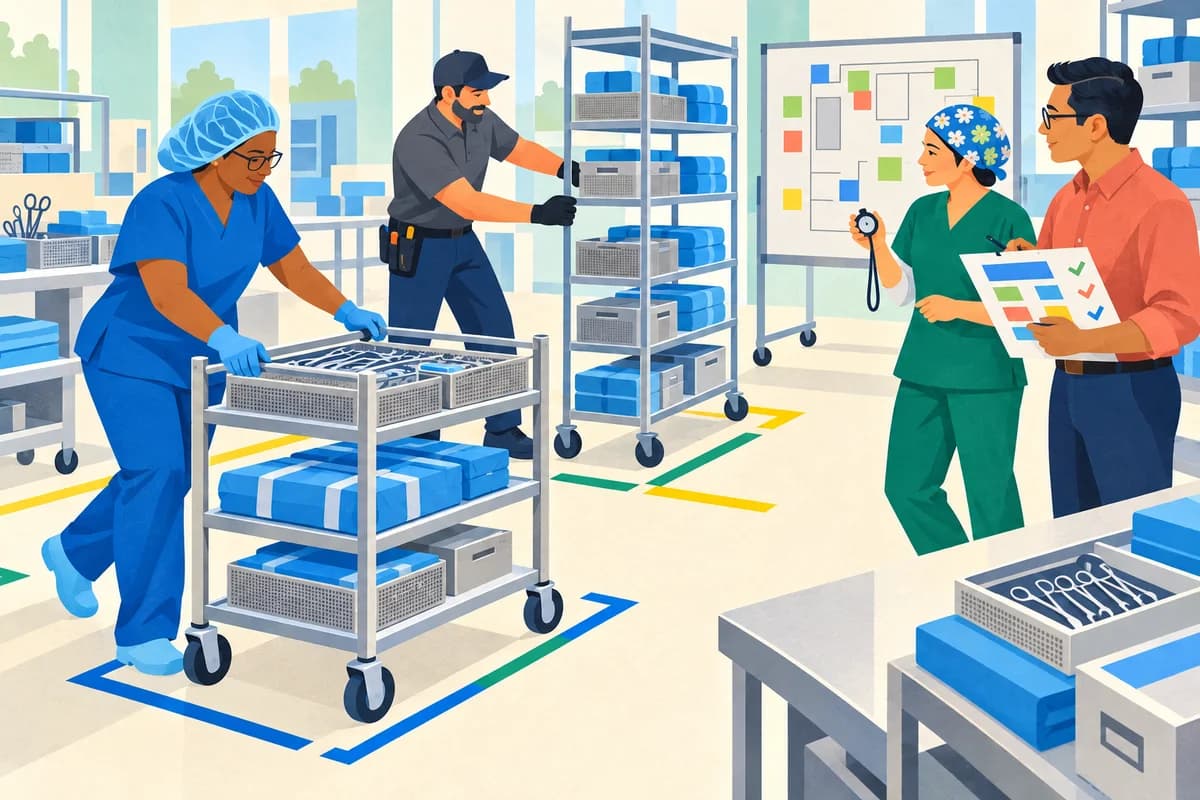 Running kaizen events in healthcareHow to plan and run a healthcare kaizen event (rapid improvement event), who to involve, what happens each day, and how to keep the gains after event week.
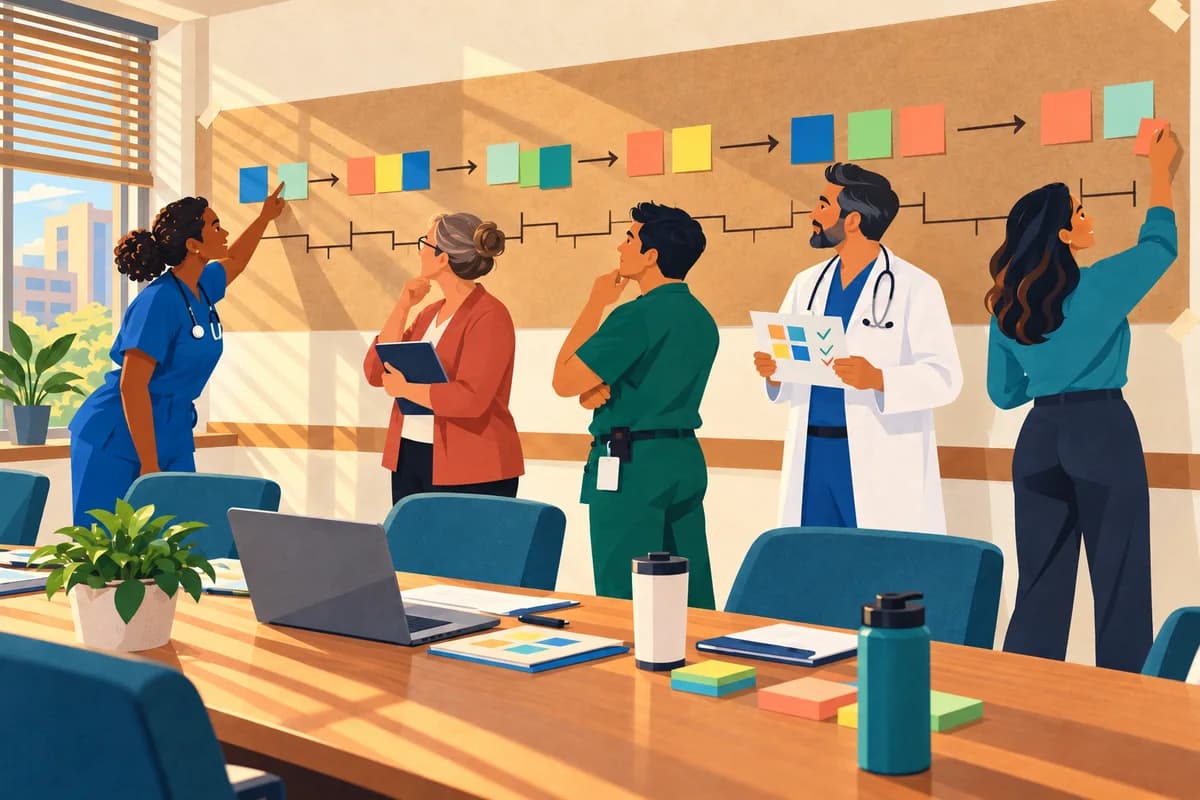 Value stream mapping for healthcareHow to map a patient's journey end to end, separate value-added time from waiting, design a future state and turn the gaps into improvement work.
 Standard work for healthcare processesWhat standard work is in lean, how it differs from policy, healthcare examples with published results, and how to check it's followed and kept current.
 5S workplace organization for healthcareHow hospital and clinic teams use 5S to organize supply rooms and work areas, what the healthcare evidence shows, and how to keep 5S from sliding back.
 Gemba walks and leadership rounding in healthcareHow healthcare leaders run gemba walks and safety walkrounds: what to observe, which questions to ask, how to follow up, and what research says about feedback.
Safety culture and reliability
Learning from near-misses, responding fairly to error and designing for reliability.
 Learning from defects in healthcareHow frontline teams use the Learning from Defects tool's four questions to find the system causes behind near-misses and fix them before patients are harmed.
 Just Culture in healthcare safetyDavid Marx's Just Culture model for healthcare: human error, at-risk and reckless behavior, the right response to each, and how to make reporting feel safe.
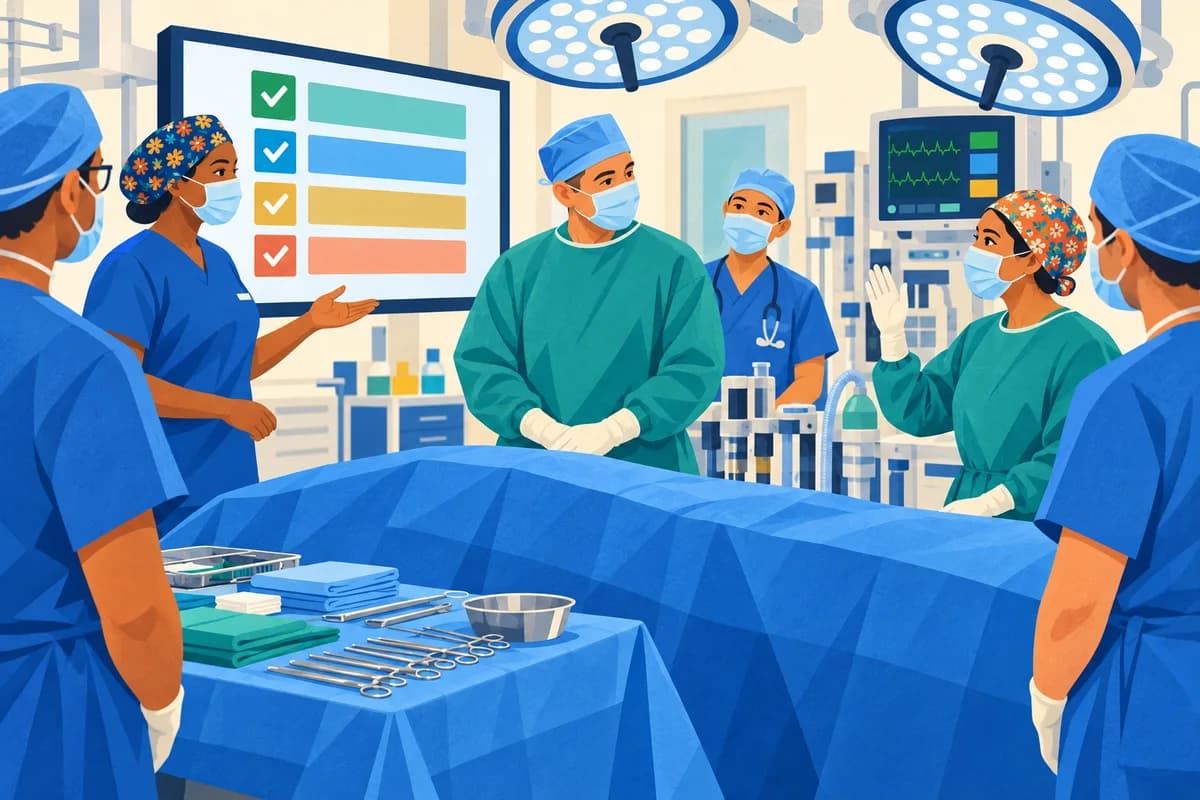 Building a high reliability organization in healthcareWhat high reliability means for hospitals: Weick and Sutcliffe's five principles, The Joint Commission's framework, and the practices that make them work.
Contact us
Talk with us about your program
Tell us what you are working on. We'll show how ImprovementFlow supports it, from the first report to lasting change.
We typically respond within one business day.
Prefer email? info@communify.us