

ImprovementFlow · Improvement Methods
Design the new process right the first time, then prove it works
When you're opening a clinic, launching a service or replacing a process that can't be patched, DMADV gives the work a path: define, measure what patients and staff need, analyze the options, design the details and verify the result. ImprovementFlow keeps each phase, its owners and its measures on one project, from the first requirement to the pilot that proves it.
Sound familiar?
What we hear from Six Sigma and process design leaders using standard approaches
Common frustrations with the usual tools and workarounds — the gaps ImprovementFlow is built to close.
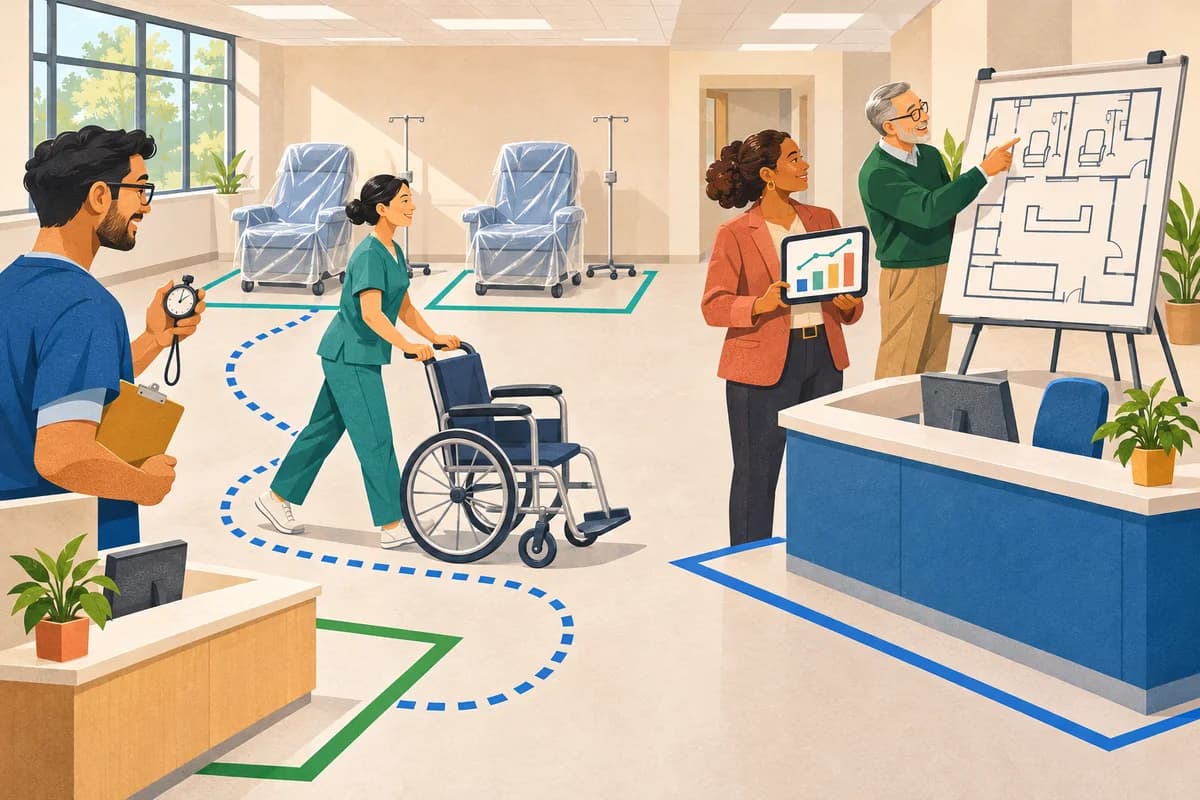
We designed the new clinic around the floor plan. Nobody asked how patients would actually move through it.
Our Six Sigma tools assume there's a process to measure. This one doesn't exist yet.
The design decisions are spread across slide decks, emails and three people's notes.
How it works
Five phases, one project, every decision traceable
Keep the Design for Six Sigma discipline your belts already know. ImprovementFlow gives each phase a place, an owner and the measures it depends on.
- 1
Start from the DMADV template
Start each design project from the ready-made DMADV template, with a section for each phase, Define, Measure, Analyze, Design and Verify. Your coaches can adapt its prompts, and every design project starts from the same structure.
- 2
Define and measure what matters
State the goal, scope and sponsor, then capture what patients, families and staff need from the new process as measurable targets, with a goal value on each linked metric.
- 3
Analyze and design with the team
Compare design options, test the riskiest assumptions in small experiments and record the anticipated and actual effect of each. Tools such as process mapping and FMEA sit alongside the design.
- 4
Assign the work to build it
Every design element that needs building, from staffing to signage to order sets, becomes a plan step with an owner, a team and a due date.
- 5
Verify before you scale
Pilot the new process, compare the measures with their goals, record whether the design held up, and capture lessons learned before rolling it out to other sites.
In practice
Designing a new outpatient infusion clinic with DMADV
Each phase answers one question and produces something the next phase depends on. The project shows where the team is and what's still to come.
New outpatient infusion clinic, opening in the spring
Define
CompleteWhat are we designing, and why?
- Goal, scope and sponsor agreed
- Opening date and budget set
Measure
CompleteWhat do patients and staff need?
- Patient and nurse interviews
- Targets: chair wait, total visit time
Analyze
In progressWhich design meets those needs?
- Three layouts compared
- Taped-floor walk-through timed
Design
NextWhat exactly will we build?
- Layout, staffing and scheduling rules
- Plan steps with owners and dates
Verify
NextDoes it meet the targets?
- Pilot weeks measured against goals
- Handoff to the clinic's owners
DMADV or DMAIC?
Use DMAIC to improve a process that already exists and can be measured. Use DMADV when the process doesn't exist yet, or when the current one is so far from what's needed that redesign beats repair. Both end with proof: DMAIC with controls that hold the gain, DMADV with verification that the new design meets its targets.
Illustrative project with no patient information. Your teams can adapt the template's phases, prompts and measures.
Who it's for
Something useful for everyone involved
- Design teams
- One project for each phase's work, with the requirements and decisions the next phase depends on.
- Black belts and improvement coaches
- Every design project at its current phase, built on a template that matches how they teach DMADV.
- Project sponsors
- A clear view of which phase each project is in, what's done and what's still at risk.
- Operational owners of the new service
- Verified targets and the measures behind them, handed over with the project, not lost at go-live.
- Quality and strategy leaders
- Design projects alongside DMAIC, A3 and PDSA work, so new services and fixes are managed in one place.
What changes
From working around the problem to working on it
Today
- Design decisions in slide decks and inboxes
- Requirements gathered once, then forgotten
- Build tasks tracked in a separate tool
- Go-live with no agreed definition of success
With ImprovementFlow
- Each phase on one project with its owners
- Patient and staff needs as measurable targets
- Plan steps with an owner, a team and a due date
- A pilot verified against its goals before scale-up
Built for healthcare design work, not just defect reduction
- DMADV and DMAIC side by side
- Design new processes with DMADV and improve existing ones with DMAIC, A3s and PDSA cycles, using tools such as process mapping, fishbone diagrams and FMEA.
- A ready-made template you can adapt
- ImprovementFlow ships a ready-made DMADV template, and your team can customize its phases, prompts and sections to match the Design for Six Sigma approach your coaches teach.
- Secure from day one
- HIPAA compliance, a BAA and SSO are included in every package.
Getting started
Your first 90 days
Start with one design project that already has a sponsor and a deadline.
Weeks 1–2
Adapt the ready-made DMADV template with your coaches and set up the first design project, its sponsor and its team.
Weeks 3–6
Work through Define and Measure: capture what patients and staff need and turn it into measurable targets.
Weeks 7–12
Analyze and design with plan steps assigned, plan the verification pilot, and choose the next projects to bring in.
Guides
Guides for Six Sigma and design teams
Plain-language primers on the methods that sit around DMADV.
- DMADV in healthcareEach phase, choosing between DMADV and DMAIC, turning patient and staff needs into targets, and where design projects stall.
- DMAIC and Six SigmaThe improvement side of Six Sigma: when it's worth the rigor, and why projects stall at Measure.
- Process mappingDrawing the process as it will run, step by step, before anything is built.
- FMEAFinding how a new process could fail before it goes live.
- PDSA cyclesSmall, fast tests of change to check design assumptions before the pilot.
Frequently asked questions
- When should we use DMADV instead of DMAIC?
- Use DMAIC when a process already exists and you can measure how it performs today. Use DMADV when you're designing something new, such as a clinic, a service line or a process that doesn't exist yet, or when the current process is so far off that it's better to redesign it than repair it.
- Has DMADV been used in healthcare?
- Yes. Design for Six Sigma has been used to plan new healthcare processes, such as a hospital's employee influenza vaccination program.
- Can we adapt DMADV to our own phases and prompts?
- Yes. ImprovementFlow ships a ready-made DMADV template, and project templates can be customized, so yours has the sections and prompts your coaches teach. Teams pick from templates sized to the work, from a quick-start project to a large, multi-team effort.
- Do our teams need a black belt to run DMADV?
- A trained coach helps, especially in Measure and Analyze. The template's prompts guide each phase, so one coach can support more design teams.
- What happens after the Verify phase?
- The verified measures stay with the project, and the people who own the new service can keep tracking them. If performance later drifts, the team can open a DMAIC or PDSA project linked to the same measures.
- What about security?
- HIPAA compliance, a BAA and SSO are included in every package.
Often used alongside
 Improvement Projects
 Strategic Initiatives
 FMEA
 Quality Reporting
Contact us
Bring us the service you're about to build
Tell us what you're designing and when it opens. We'll walk through how a DMADV project would carry it from the first requirement to a verified pilot.
We typically respond within one business day.
Prefer email? info@communify.us