

ImprovementFlow · Reporting Programs
Learn from every near-miss — quick for staff to report, built for the volume that follows
Staff capture the near-misses and early warning signs they see every day from a phone, tablet or desktop in under a minute. Each catch goes to the reviewer who owns that area with a named owner, so a growing stream of reports doesn't stall in one inbox, and catches pooled across units, sites and service lines reveal the process that keeps tripping people up. Then the person who caught it is thanked by name, so the next catch gets reported too.
Sound familiar?
What we hear from patient safety leaders using standard approaches
Common frustrations with the usual tools and workarounds — the gaps ImprovementFlow is built to close.
My nurses catch things every shift. They just don't write them down, because nothing happened.
Once people started reporting, the catches came in faster than we could review them.
We close each report on its own and never see that it's the same problem forty times across our hospitals.
How it works
From a catch on the unit to a process that's safer for everyone
Five steps separate a GoodCatch program from a near-miss form. Each one keeps reporting quick for staff and keeps review moving as the catches add up.
- 1
Capture in under a minute
Staff report a near-miss from a phone, tablet, desktop or kiosk, or scan a QR code on the unit — as themselves, as a team or anonymously. The form asks for what matters and nothing more.
- 2
Route it to the right reviewer
Each catch goes to the reviewer who owns that area, and potential severity decides how it's routed, so high-potential catches don't wait behind routine ones. An owner (the Champ) is named and the status is visible, so review is shared across the teams who can act instead of piling up in one queue.
- 3
Review catches together
Pool reports by unit, site, severity and tag to find the look-alike packaging, the awkward handoff or the workaround that keeps coming up. One systemic fix can answer dozens of catches.
- 4
Fix the process, not the person
Choose the strongest fix you can — design changes first, reminders last — and open a linked A3 improvement project when the fix needs a team.
- 5
Recognize the catch and report back
The person who caught it hears what changed, and great catches are celebrated on the unit's huddle board, so catching problems early becomes what good looks like.
After the last step, the loop returns to step 1: The reporter sees the fix — and spots the next one
In practice
One GoodCatch, all the way around the loop
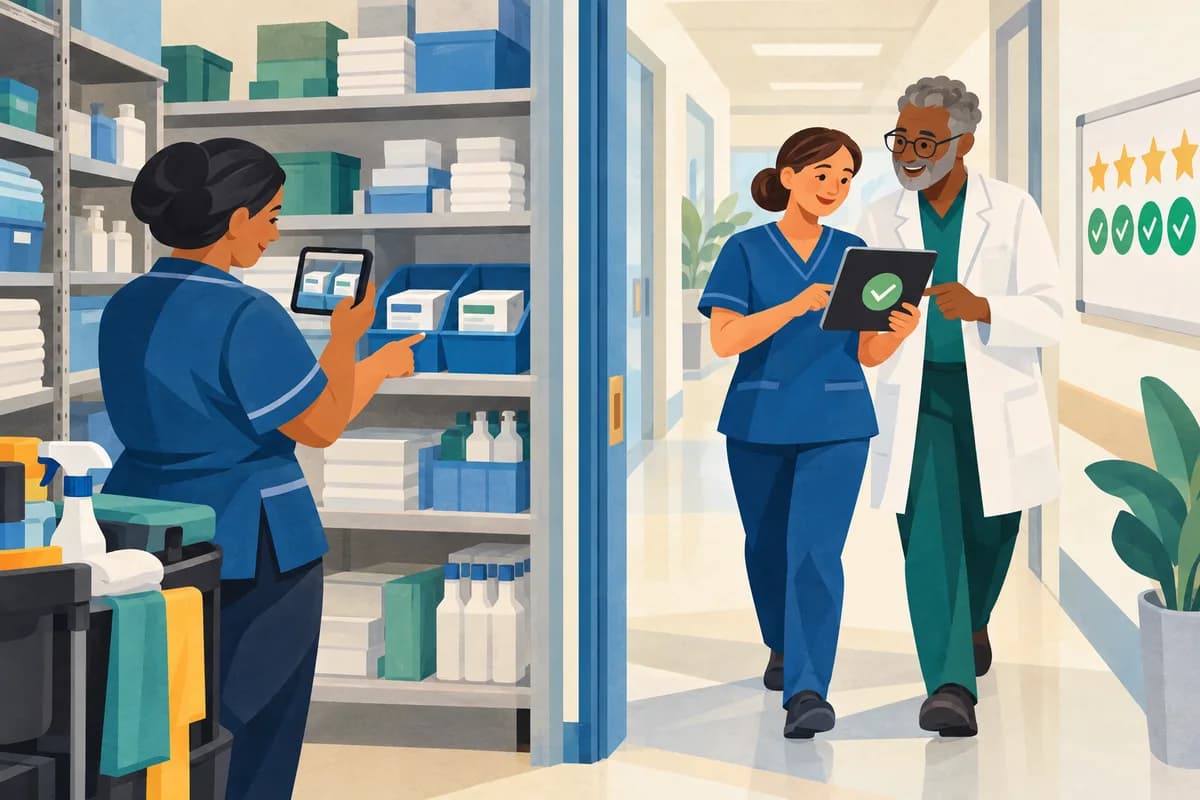
A housekeeper notices two look-alike products stored in neighboring bins. Here's what happens next.
- 1
Spot it
Two look-alike products are stocked side by side in the 4 West supply room. Nobody has picked the wrong one — yet.
- 2
Submit it
She scans the QR code by the door and reports it from her phone. It's routed to pharmacy and the unit manager.
- 3
Review and fix
Pharmacy finds two similar catches from other units. The strong fix: separate the bins on every unit, not a reminder email.
- 4
Thank and tell
She gets feedback on what changed, and her catch is recognized by name on the 4 West huddle board.
The loop closes, so staff keep catching
Illustrative example with no patient information. Your program sets its own categories, reviewers and recognition.
Who it's for
Something useful for everyone involved
- Frontline staff
- A way to report what almost happened in under a minute from whatever device is closest, without blame, and credit when their catch makes things safer.
- Unit managers
- Their unit's catches, owners and fixes in one place, and a way to thank people at the daily huddle.
- Patient safety and quality teams
- Catches pooled across units, sites and service lines, so the systemic patterns single reports hide become visible, without sorting every catch themselves.
- Pharmacy, facilities and other reviewers
- The catches in their area, routed to them with context, instead of forwarded emails.
- Executives and safety sponsors
- Evidence the organization is finding risk early, and which catches led to real process changes.
What changes
From working around the problem to working on it
Today
- Near-misses mentioned at the desk and forgotten
- A growing pile of catches waiting on one reviewer
- Each report closed on its own
- Fixes that amount to "be more careful"
- Reporters never hear what happened
With ImprovementFlow
- Catches captured on any device in under a minute
- Each catch routed to the reviewer who owns that area, with a named owner
- Catches pooled across units and sites to reveal the pattern
- Fixes ranked by how durably they remove the risk
- Feedback to the reporter and recognition on the huddle board
5,000+
At UNC Health Care, over 5,000 safety reports and near-miss GoodCatches were reviewed and pre-emptive actions taken. On the AHRQ Patient Safety Culture Survey, the "Patient Safety and Quality Issues" result rose from 51% positive in 2009 to 90% in 2015.
Read the UNC Health case studyBuilt on how high-reliability organizations learn
- Developed with frontline improvement teams
- The core of ImprovementFlow was developed from the continuous quality improvement practices of UNC Health Care's Radiation Oncology department, then extended and scaled.
- Just culture, quick capture
- Staff report in under a minute, as themselves, as a team or anonymously, and the name "GoodCatch" credits the person who caught it, reframing a report as a contribution rather than a confession.
- Built for the volume a healthy program creates
- Routing by severity, a named owner on every catch, escalation across tiers and consolidated views across sites and service lines keep review moving as reporting grows. HIPAA compliance, a BAA and SSO are included in every package.
See how this would work for your teams
We typically respond within one business day.
Getting started
Your first 90 days
Start small, make the first catches visible, and let the recognition do the recruiting.
Weeks 1–2
Agree your near-miss categories and reviewers, keep the form short, and post QR codes on two or three pilot units.
Weeks 3–6
Review catches weekly, send feedback on every one, and recognize great catches at the daily huddle.
Weeks 7–12
Pool the catches to find the first systemic fix, track reporting rate and time to feedback, and choose the next units.
Fixes ranked by how durably they remove the risk
- Strong: design the risk out
- Forcing functions and constraints; equipment, layout and physical changes; automation that removes the error-prone step.
- Intermediate: make the safe path the easy path
- Standardized protocols and checklists; redundancies and independent double-checks; targeted alerts and reminders in the workflow.
- Weak: rely on people to remember
- Training and education, new policies and rules, and "be more careful" messaging. Rarely enough on their own.
Guides
Go deeper on near-miss reporting
- How to build a GoodCatch programExecutive sponsorship, frictionless capture, tiered review and closed-loop feedback.
- Near-miss reportingWhy near-misses are your best and most under-reported source of safety intelligence.
- Reducing reporting frictionEvery extra field is a report you'll never get. Designing for 60-second submission.
- Closing the feedback loopThe black hole that kills reporting programs, and how to make follow-up the default.
- Just cultureThe non-punitive but accountable culture that makes honest reporting safe.
- Learning from defectsA structured method for turning near-misses and defects into systemic understanding.
Frequently asked questions
- How is GoodCatch different from safety event reporting?
- Safety reporting captures adverse events and harm that have already occurred. GoodCatch is for near-misses and weak signals — what almost happened — and turns them into workflow and process improvements. Many organizations run both on the same system.
- Won't more near-miss reports just create more work for reviewers?
- A rising number of near-miss reports is a sign of a healthier reporting culture, not a problem. Routing sends each catch to the reviewer who owns that area with a named owner, catches a unit can't resolve can be escalated to the next tier, and reviewing catches together means one systemic fix can answer dozens of reports. The safety team oversees the program instead of sorting every catch.
- How quickly can staff report a catch?
- In under a minute, from a phone, tablet, desktop or kiosk, or by scanning a QR code on the unit. The form asks for what matters and nothing more, and your team can change it without IT if it starts asking too much.
- Can we run one GoodCatch program across several hospitals?
- Yes. Every unit and site reports the same way, reviewers work the catches routed to them, and consolidated views show catches across departments, sites and service lines, so a pattern on one campus can lead to a fix on all of them.
- Can staff report anonymously?
- Yes. Staff can submit as themselves, as a team or anonymously, and shared submission points can use a group password. Anonymity is set separately for each report form, so your GoodCatch form can follow different rules from your other reports. Feedback messages go to named submitters; anonymous submitters see what happens next when they submit.
- How do we know the program is working?
- Watch four measures: the near-miss share of reports, the reporting rate, the time it takes a reporter to hear back, and the percentage of catches that led to a real workflow or process change.
- How does recognition work?
- GoodCatches can surface on your teams' digital huddle boards, which teams build and configure themselves, so catches are celebrated by name at the daily huddle alongside the unit's metrics.
- What about security?
- HIPAA compliance, a BAA and SSO are included in every package.
Often used alongside
 Safety Reporting
 Tiered Huddles
 Improvement Projects
 Quality Reporting
Contact us
Make catching problems early the thing your staff are known for
Tell us how near-misses reach you today, if they do, and who reviews them. We'll show how staff report a catch in under a minute, how review keeps pace as catches add up, and how a catch on one unit becomes a fix on every unit.
We typically respond within one business day.
Prefer email? info@communify.us