
Key takeaways
- Screen at intake for animals, weapons, others in the home and access concerns, and flag what you find for every visitor.
- Make reporting possible from a phone right after leaving a visit.
- Run check-ins for higher-risk visits and test what happens when one is missed.
- Tell staff in writing that they may end an unsafe visit and leave.
The risks of working alone
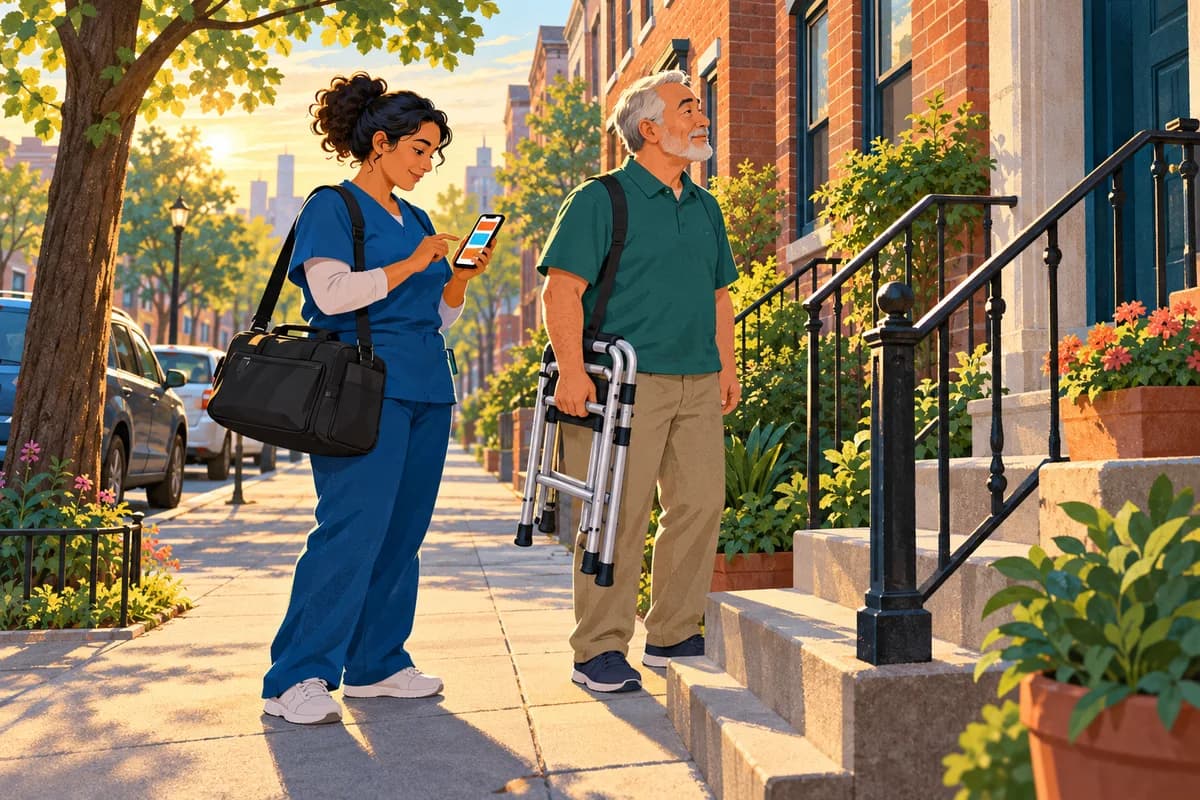
Home health workers face a risk profile unlike any facility. They work alone in patients' homes, often in unfamiliar neighborhoods, with no security staff, no colleague within earshot and no immediate backup. The controls that help in a hospital (sightlines, controlled access, alarms) don't exist in someone's living room.
The Joint Commission's workplace violence requirements for home care organizations took effect on January 1, 2025. They cover leadership oversight, policies and procedures, reporting systems, data collection and analysis, post-incident support and follow-up, and staff training, adapted to care delivered in the home.
Hazards in and around the home
NIOSH's hazard review of home healthcare lists risks beyond aggression from patients or family members: guns and other weapons, illegal drugs, hostile or unrestrained animals, violence in the building or neighborhood, unhygienic conditions and long drives between visits. Physical hazards such as poor lighting, clutter and unstable stairs add to the list.
Aggression in the home is often driven by things the agency can't control, such as caregiver stress, mental illness or substance use in the household, or frustration with what home care can offer. Early identification of higher-risk visits, through intake screening, flags from earlier incidents and communication with case managers, lets the agency put protections in place before a visit rather than after an incident.

ImprovementFlow
Workplace Violence Prevention
Workplace Violence Prevention lets staff in the field report from a phone, as themselves or anonymously, and routes each report by type and severity to the people who need to know.
Mobile reporting from the field
If a report can't be completed on a phone, home health staff won't use it. A worker who has had a threatening visit should be able to report right after leaving, from the car or the next stop, while details are fresh.
Useful fields for home visits include the address or visit, who in the household was involved, environmental hazards seen and the worker's view on whether the next visit is safe. That information protects the next person who visits, and it informs decisions about changing the care plan, pairing staff or, as a last resort, ending service.
Check-ins, paired visits and the right to leave
Check-in protocols are the main safety net when there is no security desk. Workers share their visit schedule and check in with a central contact at agreed times on higher-risk visits, so someone notices when a check-in is missed. Some agencies use location-sharing apps for workers who prefer not to check in by hand.
Paired visits cost more but are appropriate for documented high-risk households. Clear criteria for when pairing is required, recorded in the client record and visible to schedulers, make sure what staff report actually changes the schedule. Every worker should know they may end a visit and leave if they feel unsafe, without penalty.
What to do this quarter
- Add three or four safety questions to intake: animals, weapons, others in the home and access concerns.
- Set up a simple flag that carries a household's safety notes to every scheduler and visiting clinician.
- Test your check-in process: what happens, and how fast, when a check-in is missed?
- Tell staff in writing that leaving an unsafe visit is supported.