
Key takeaways
- In a survey of 1,214 Oregon homecare workers, half reported verbal aggression in the past year and almost a quarter reported workplace violence. Expect underreporting in your own data.
- Give every field worker a way to report a threat or unsafe home from their phone, and make sure a supervisor calls them back the same day.
- Build connection on purpose: a short virtual huddle each week, a buddy check-in for high-risk visits, and supervisor ride-alongs that are about support, not audit.
- Ask staff to flag a visit as hard as soon as it ends, and follow up on those flags as reliably as you follow up on missed visits.
The isolation of working alone
Home health workers deliver care where their colleagues never see it. Hospital staff can debrief with a teammate right after a hard encounter. Home health aides, nurses and therapists drive from home to home and can go a whole day without meaningful contact with a colleague. That isolation makes burnout more likely even when the caseload is manageable, because the informal support of working alongside others is missing.
It also means asking for help takes deliberate effort. A hospital nurse who is struggling can mention it to the charge nurse. A home health worker may have no natural chance to tell anyone until a supervisor checks in, and in many agencies that happens rarely. The support that exists passively in a building has to be built on purpose in home health.
Safety risks inside patients' homes
Patients' homes bring risks that institutional settings rarely do: unsafe neighborhoods, loose animals, weapons, clutter and fall hazards, and aggression from patients or family members. In a study of 1,214 Oregon homecare workers employed directly by the people they served, 50% reported verbal aggression in the past year, 24% reported workplace violence and 26% reported sexual harassment. Those workers were aides rather than agency nurses, but the risks of working alone in a home apply to both.
Much of it never reaches the agency. Home health workers who don't report incidents give familiar reasons: the incident seemed too minor, nothing would be done, or violence is just part of the job. If your incident log for field staff is nearly empty, that more likely reflects how hard reporting is than how safe the visits are.
Sources
- Hanson GC et al., "Workplace violence against homecare workers and its relationship with workers health outcomes: a cross-sectional study," BMC Public Health 15 (2015)
- Small TF et al., "Workplace Violence Prevalence and Reporting in Home Health Care," Home Health Care Management & Practice 35(1) (2022)

ImprovementFlow
Workplace Violence Prevention
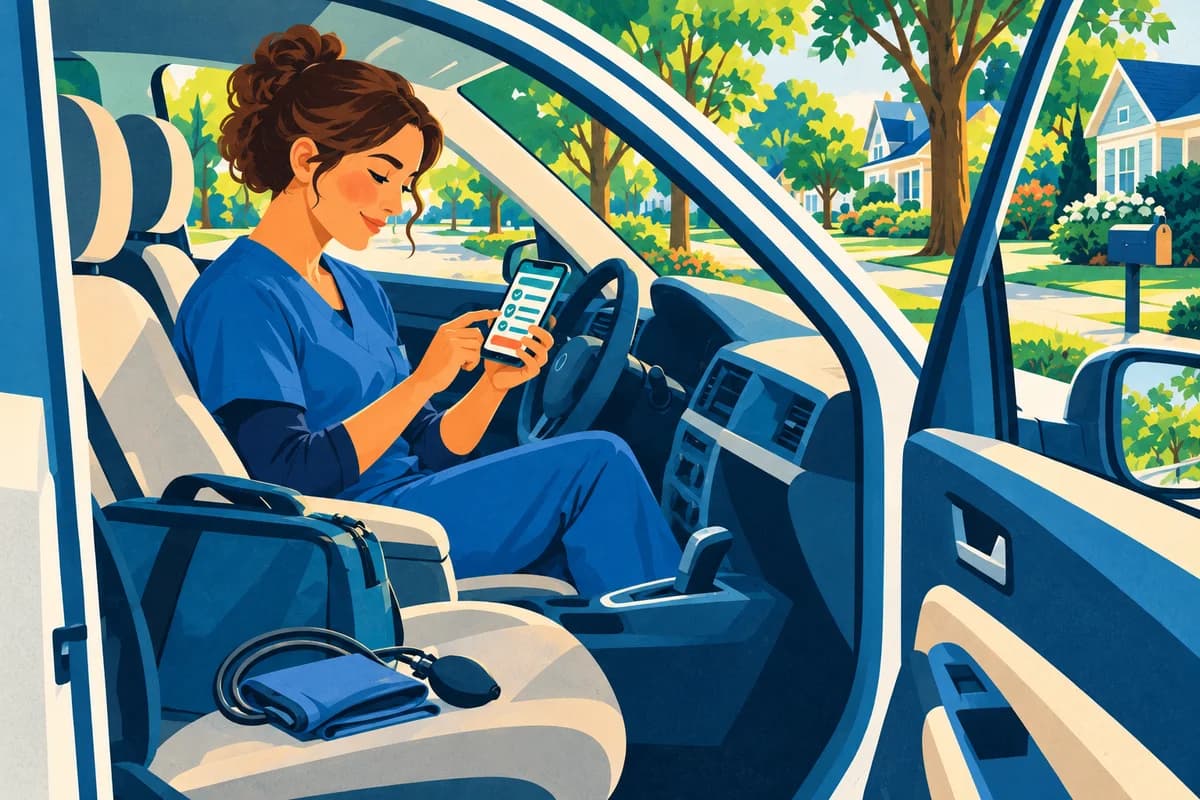
A home health worker who is threatened in a patient's home often has no one nearby to tell. Workplace Violence Prevention lets staff report from their phone, routes the report to the right reviewers, and makes sure someone follows up with the person affected.
Compassion fatigue in intimate, one-to-one care
Caring for someone in their own home is intimate. Aides who help with bathing, eating and moving often become an emotional anchor for patients who are isolated themselves. Nurses and therapists see firsthand the family strain, the empty refrigerator or the caregiver who is barely coping.
Carrying that day after day, alone, wears people down in a way that workload measures miss. It needs to be recognized by name and given an outlet, such as a regular debrief, a supervisor who asks about the hardest visit of the week, or time to grieve when a long-term patient dies.
Building support for a team that's never in one place
Traditional well-being programs assume people share a building: group sessions, in-person check-ins, break-room conversations. A home health agency has to bring the support to the worker instead. That means anything you ask of field staff, whether a check-in, a safety report or a request for help, must work from a phone in a parked car between visits.
Make connection part of the schedule. Hold a short virtual team huddle each week. Pair staff for check-in calls before and after visits flagged as high risk. Have supervisors ride along occasionally to support, not to audit. Treat a field worker who reports a threatening household the way a hospital treats an assault on a unit, with same-day contact from a supervisor, a review of whether the next visit needs a second person, and follow-up a week later.
What agency leaders can do this quarter
Ask your field staff two questions: Do you know how to report an unsafe visit from the field? Has anyone followed up the last time you did? The answers will show you where to start.
Then put three things in place: a phone-based way to report safety concerns and threats, a named reviewer who follows up with each reporter, and a monthly look at where incidents cluster by area, visit type or time of day. ImprovementFlow handles the reporting and routing in the same system as safety events and improvement projects, so a pattern of incidents can become a tracked prevention project rather than a list.