
Key takeaways
- Control access between the waiting room and treatment areas, fix blind spots and put alarms where incidents happen.
- Tackle the tension drivers: long waits, boarding, poor updates for families and unsafe staffing.
- Make reporting fast at the station and capture acuity, substances, wait time and staffing.
- Analyze incidents by hour and location, and launch one prevention project for the busiest hotspot.
Why the ED carries so much risk
The emergency department is one of the highest-risk settings for violence in acute care. In ACEP's 2024 poll, 91% of emergency physicians said they or a colleague had been threatened or attacked in the past year, and 71% believed ED violence was getting worse. Press Ganey's analysis of nursing data placed EDs among the units with the most assaults on nursing staff.
The ED combines several risk factors in one place: patients in psychiatric crisis, patients or visitors under the influence of alcohol or drugs, long waits that build frustration, boarding of patients awaiting beds, open public access and the possibility of weapons.
Verbal aggression is close to universal, and physical assaults are common enough that many experienced staff treat them as routine. That normalization suppresses reporting and leaves leaders without the data they need to act.
Environmental and operational controls
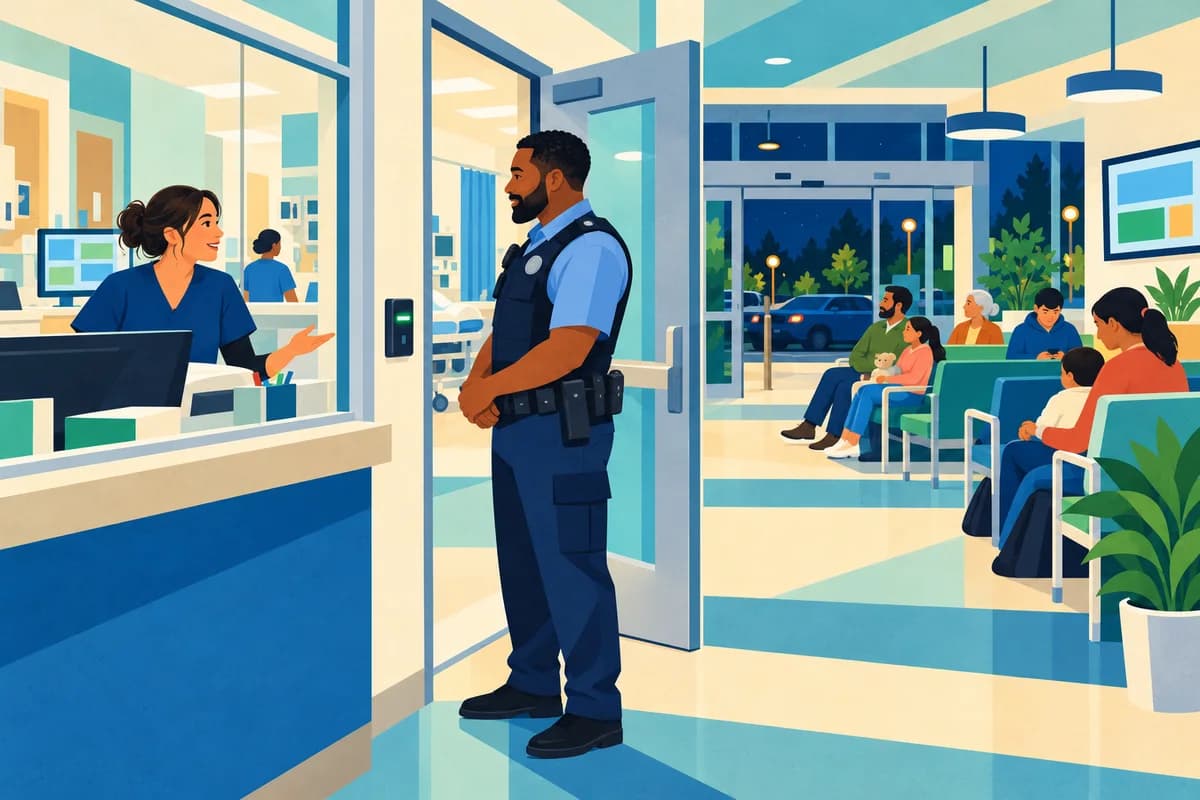
Environmental measures widely recommended for EDs, including in OSHA's guidelines, include controlled access between the waiting room and treatment areas, sightlines that keep staff in view of colleagues, panic alarms placed where incidents occur, and staff areas with a second exit. Weapons screening can make sense where incidents involving weapons are documented, but it needs staffing and clear procedures.
Operational measures address the conditions that raise tension: staffing that allows safe patient management, shorter waits, regular updates for waiting patients and families, early identification of patients at risk of aggression, and a plan for patients boarding in the department. Some states now require specific ED measures; Ohio, for example, requires a staff member trained in de-escalation to be present in the emergency department at all times.

ImprovementFlow
Workplace Violence Prevention
Workplace Violence Prevention lets ED staff report from a phone or a QR code at the station, routes reports to security and ED leadership, and shows where incidents cluster by unit, time of day and event type.
Reporting that works in a busy department
ED staff won't stop mid-shift for a long form. Mobile reporting with few required fields, a QR code at the station and the option for a colleague or charge nurse to start a report are essential. Useful fields for the ED include patient acuity, whether substances were involved, wait time and staffing at the time of the incident.
Analyze ED data by time of day and day of week, by patient population and by staffing configuration and shift change. That connects violence prevention to decisions about staffing, patient flow and layout, not only to training.
Building a staff-driven prevention program
ED teams often develop informal safety practices that the organization can formalize: buddy protocols for high-risk patients, signals that a colleague needs help and short debriefs after significant incidents. Writing these down and tracking how they work turns individual know-how into organizational learning.
No single measure is enough. Training without reporting produces no data, and reporting without a visible response produces no change in culture. The programs that work combine environmental controls, operational changes, reporting and peer support.
What to do this quarter
- Walk the department with security and frontline staff at night and on a weekend, and list blind spots, alarm gaps and access points.
- Post QR codes at triage and the main station, and remind staff at huddles that verbal threats count.
- Review three months of reports by hour and location and pick the busiest hotspot.
- Launch one prevention project for that hotspot with an owner, two or three actions and a measure.
How ImprovementFlow supports this
ImprovementFlow lets ED staff report from a phone or a QR code at the station, routes reports to security and ED leadership by type and severity, shows where incidents cluster by unit, time of day and event type, and links prevention projects to the reports that prompted them.