
Key takeaways
- Crosswalk policies and evidence that cite old NPSG or Environment of Care numbers to the 2026 numbering.
- Complete a comprehensive systematic analysis and action plan within 45 business days of a sentinel event; reporting it to the Joint Commission is voluntary.
- Run a proactive risk assessment on one high-risk process at least every 18 months, and show what changed.
- Evaluate safety culture with a valid, reliable tool and be ready to show what leaders did with the results.
What changed in 2026
On January 1, 2026, the Joint Commission's Accreditation 360 changes took effect for hospitals and critical access hospitals. The manual was realigned with the CMS Conditions of Participation, and requirements that go beyond CMS, including the former National Patient Safety Goals (NPSGs), were consolidated into a new chapter of 14 National Performance Goals (NPGs). The Joint Commission says the restructuring removed more than 700 requirements from the hospital program.
For a hospital, the practical message is that most patient safety expectations didn't disappear; they moved and were renumbered. Other accreditation programs, such as ambulatory care and behavioral health, still use NPSGs, so check which manual applies to each of your sites.
The patient safety requirements surveyors focus on
A hospitalwide patient safety program
Under NPG Goal 2 ("The governing body and leadership team foster a culture of safety"), leaders implement a hospitalwide patient safety program whose scope runs from close calls and good catches to hazardous conditions and sentinel events. Leaders must provide internal reporting systems staff can use without risk of retaliation, encourage external reporting, analyze system and process failures, and share lessons learned with affected staff.
Sentinel events
When a sentinel event occurs, the hospital must complete a comprehensive systematic analysis (such as a root cause analysis) and a corrective action plan within 45 business days of the event or of learning about it. Reporting a sentinel event to the Joint Commission is voluntary, though strongly encouraged; doing the analysis is not. From January 1, 2027, the Joint Commission plans to align its sentinel event list with the National Quality Forum's 2025 Serious Reportable Events list.
Proactive risk assessment
At least every 18 months, the hospital selects one high-risk process and conducts a proactive risk assessment, such as a failure mode and effects analysis, then uses the results to reduce risk. Surveyors look for the choice of process, the analysis and what changed because of it.
Culture of safety
Leaders must regularly evaluate the culture of safety using valid and reliable tools (the AHRQ Surveys on Patient Safety Culture are a common choice), then prioritize and implement improvements. Leaders also maintain a code of conduct and a process for managing behaviors that undermine a culture of safety, and make support available to staff involved in adverse events.
Familiar safety goals, new home
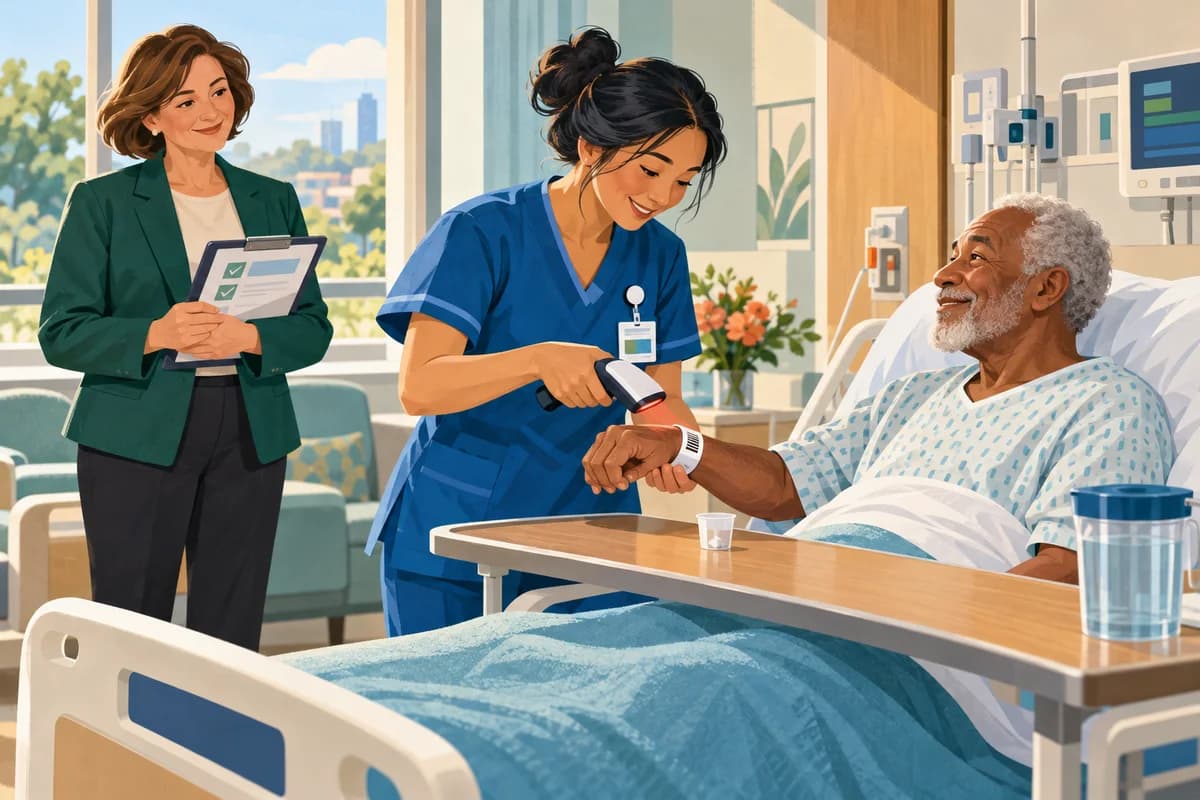
- Patient identification: at least two patient identifiers, never the room number (NPG Goal 1).
- Hand hygiene: a program following current CDC and/or WHO guidelines, with goals for improving compliance (NPG Goal 5).
- Medication safety and workplace violence prevention also sit in the NPG chapter (Goals 14 and 2).
Sources
- Joint Commission, National Performance Goals effective January 2026 for the Hospital Program (NPG.01.01.01, NPG.02.03.01, NPG.05.03.01) (opens in a new tab)
- Joint Commission, Sentinel Event Policy (opens in a new tab)
- NQF, Updating the Serious Reportable Events (SRE) List (opens in a new tab)
- AHRQ, Surveys on Patient Safety Culture (SOPS) (opens in a new tab)

ImprovementFlow
Safety Reporting
Surveyors follow the trail from report to review to action. ImprovementFlow Safety Reporting routes each event and close call to the right review team, gives it an owner and a status, and tells the reporter what was done.
What this means for your organization
You need a reporting program that captures events and close calls, routes them to the right reviewers, triggers a comprehensive systematic analysis for sentinel events and tracks corrective actions to completion. Surveyors want to follow that chain, from report to review to action to verification, without anyone rebuilding it from email.
Safety management can't be purely reactive. The 18-month proactive risk assessment needs an owner, a chosen process and documented results connected to the same follow-up system as event reviews.
Culture evidence matters as much as event analysis. A steady flow of reports, visible follow-through and culture survey results that leaders acted on all show a working safety culture. Low reporting, no feedback to reporters or ignored survey results make for a difficult conversation with surveyors.
The strongest position is showing that safety data drives learning: trends reviewed by leaders, events linked to improvement work and corrective actions confirmed as effective.
What to do this quarter
- 1Crosswalk your patient safety policies and evidence to the 2026 NPG numbering, starting with Goals 1, 2 and 5.
- 2Check that your sentinel event procedure uses the 45-business-day timeline and names who decides whether to self-report.
- 3Confirm which high-risk process your next proactive risk assessment covers and when the current 18-month window closes.
- 4Look at your last culture of safety survey: what did leaders commit to change, and can you show it happened?
- 5Sample five closed event reviews and check that each has a documented action and a reporter who heard back.
How ImprovementFlow supports this
- Staff report events and close calls from any device, as themselves, as a team or anonymously.
- Each report routes to the right review team by event type, department and severity, and carries an owner, a status and tags.
- Reviewers look across events by department, severity and tag to spot recurring problems, and can open a linked A3 improvement project when a fix needs real work.
- Named reporters hear what was done, which is part of the feedback loop surveyors ask about.
Key terms
- Mock Survey: A simulated survey conducted internally or by consultants before the real one. Exposes gaps while they can still be closed without formal findings.
- Evidence Artifact: The actual document, record, observation, or data that satisfies an Evidence Slot. Artifacts are dated and versioned; the slot defines what's expected, the artifact proves it exists.