
Key takeaways
- Restraint and seclusion orders are limited to 4 hours for adults, 2 for ages 9–17 and 1 for under 9, with a face-to-face evaluation within 1 hour.
- Report deaths associated with restraint or seclusion to CMS by the close of the next business day.
- Report aggression toward staff as consistently as patient harm, in its own categories.
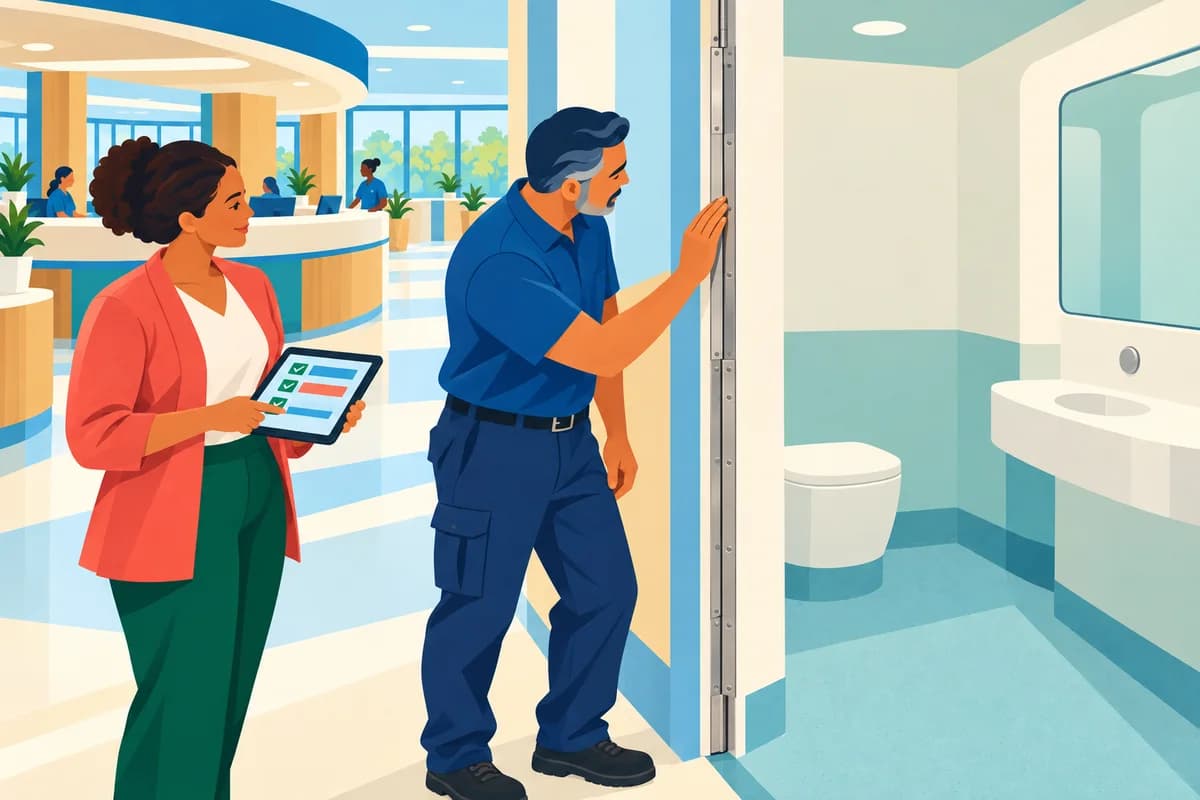
- Run regular ligature risk rounds and track every finding to a fix.
The dual safety challenge in behavioral health
Behavioral health facilities have to protect patients and staff at the same time. Self-harm, aggression toward staff and elopement each need their own reporting, investigation and corrective action, alongside the patient harm events every hospital tracks.
Restraint and seclusion carry some of the most detailed documentation requirements in healthcare: the order, its time limits, the face-to-face evaluation, monitoring and debriefing. In the middle of a behavioral crisis, staff face clinical and documentation demands at once, and a generic incident form doesn't help.
The regulatory picture is layered: state mental health licensing, accreditation standards and federal Conditions of Participation overlap without lining up neatly, and each expects its own evidence.
The behavioral health regulatory landscape
Hospitals that use restraint or seclusion for violent or self-destructive behavior must follow 42 CFR 482.13(e)–(g):
- Orders are time-limited and may be renewed up to 24 hours in total: 4 hours at a time for adults, 2 hours for ages 9–17 and 1 hour for children under 9. Standing or as-needed orders aren't allowed.
- A physician, licensed practitioner or trained registered nurse must see the patient face to face within 1 hour.
- Staff must be trained before they apply restraint or seclusion, at orientation and periodically after that.
- Deaths during restraint or seclusion, within 24 hours of removal, or within a week where restraint likely contributed must be reported to CMS by the close of the next business day.
- Psychiatric hospitals also meet special Conditions of Participation for medical records and staffing (42 CFR 482.60–482.62). The Inpatient Psychiatric Facility Quality Reporting program still includes restraint and seclusion hours (HBIPS-2 and HBIPS-3), and a new standardized patient assessment is due to start voluntarily in October 2027.
- The Joint Commission requires psychiatric hospitals and psychiatric units in general hospitals to assess environmental risk and minimize ligature risks, now under National Performance Goal NPG.08.01.01 for hospitals and NPSG.15.01.01 for behavioral health care programs.
Sources
- 42 CFR 482.13, Condition of participation: Patient's rights (opens in a new tab)
- 42 CFR 482.60, Special provisions applying to psychiatric hospitals (opens in a new tab)
- CMS, FY2027 IPF PPS final rule, Federal Register (July 31, 2026) (opens in a new tab)
- The Joint Commission, 2026 Hospital National Performance Goals (opens in a new tab)

ImprovementFlow
Safety Reporting
Behavioral health needs patient safety, staff safety and restraint events each reported and reviewed by the right people. Safety Reporting supports separate categories, including workplace violence, routes each by type and severity, and lets staff report anonymously when that's safer.
What to prioritize first
- 1Separate event categories for patient safety and staff safety, so aggression toward staff is reported and reviewed as consistently as patient harm.
- 2Set up a restraint and seclusion event that prompts for the order, time limits, face-to-face evaluation and debrief your policy requires.
- 3Run a regular ligature risk round of patient rooms and bathrooms, and track every finding to a fix.
- 4Review restraint and seclusion hours by unit each month and look for patterns by time of day and staffing.
- 5Debrief staff after every restraint, seclusion or assault, and check in with them again a few days later.
How ImprovementFlow supports this
- Separate configurable categories for patient safety events, workplace violence events and restraint and seclusion, each routed to the right reviewers by type and severity.
- Reporting as an individual, as a team or anonymously, so staff can raise sensitive concerns safely.
- Patterns across departments, severities and tags, and a linked improvement project when a pattern needs real work.